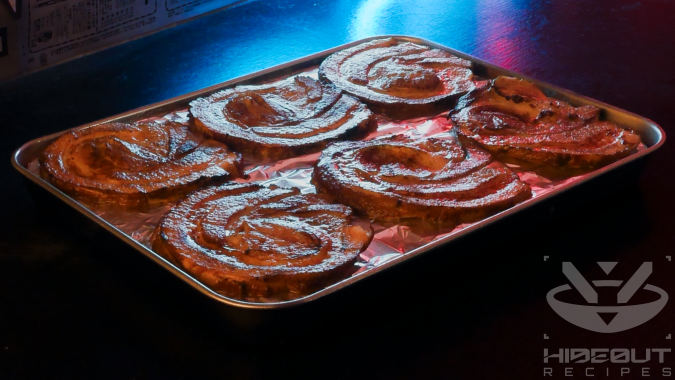
A cut of pork belly that is rolled up, seared, simmered, marinated, and then torched. It’s savory, it’s sweet, and it melts in your mouth. Arguably the best ramen topping ever conceived.
The 🍜 in the title means this recipe is part of the Hideout ramen series, not a standalone dish!
More like cha-ching!
The Chef, TASTING HIS OWN Creation
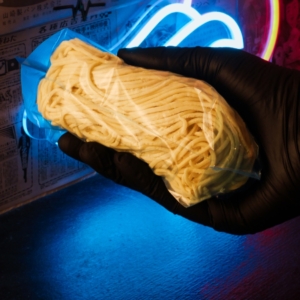
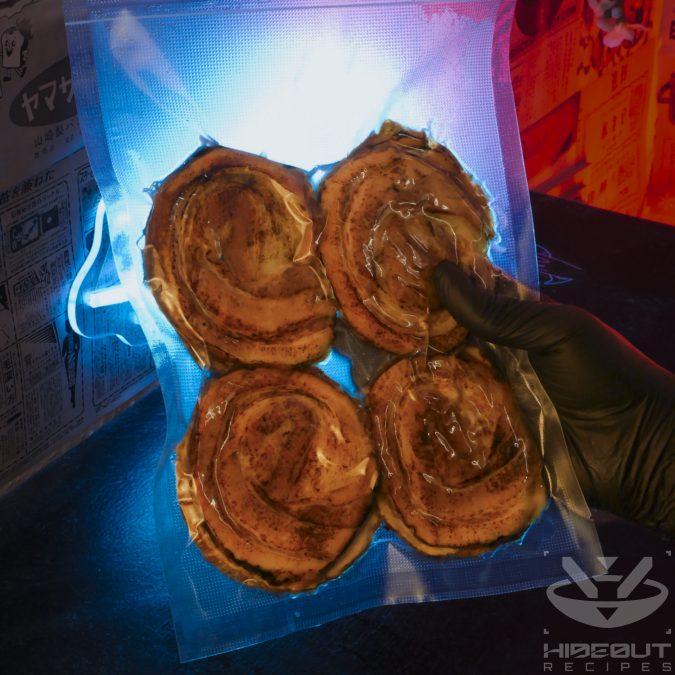
This is the first entry in my new series all about ramen toppings, and I’m kicking it off with my favorite of them all. Chashu is definitely more involved than the others, but both the taste and the yield make it absolutely worth it. From a 1 kg slab, you get around 16 to 20 slices, and they keep in the freezer for at least a month if vacuumed (picture below – but you can also freeze the whole log this way). Having some pre-portioned homemade toppings handy has often saved me time cooking, as I used them to upgrade instant ramen, which is just about the fastest and easiest dinner in the world.
I have to admit that it took me years to realize that the Japanese word chāshū is based on the Chinese char siu. However, the two are prepared in quite different ways, and while char siu can be made from a variety of cuts, chashu should be pork belly.
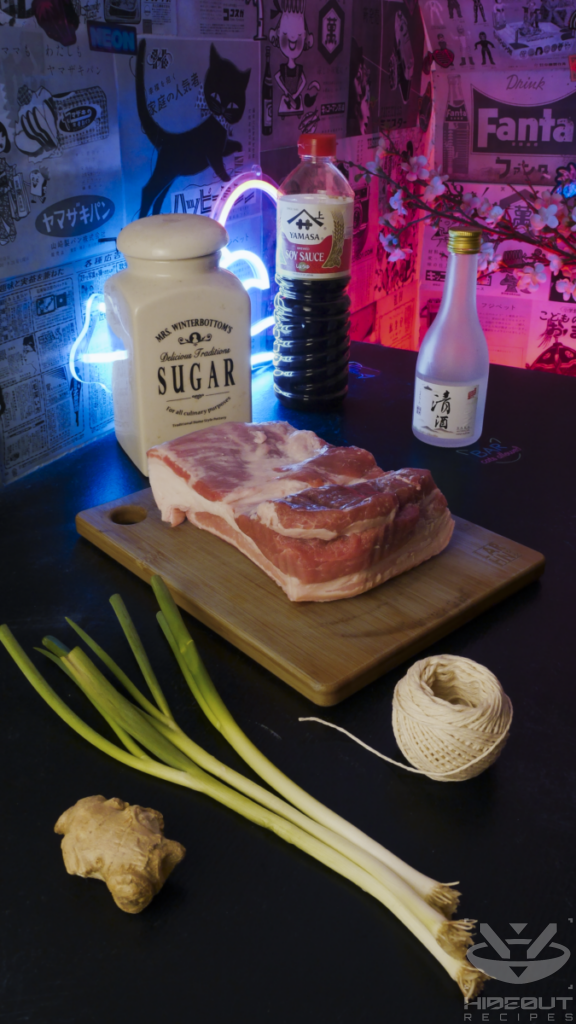
As for the aromatics, you often see Tokyo negi in recipes, which I substituted with green onions. They’re apparently not quite the same, but based on what I’ve tasted so far, it makes a negligible difference for the final taste. I cannot find Tokyo negi here in Europe, and while I’ve been able to grow some plants such as shiso and mitsuba myself, I can’t even find the seeds for it.
Pork shibari
The cut of pork belly you want for this recipe should come without bones and without the tough outer skin, but removing either or both is not very difficult – provided you have a somewhat sharp knife. It can be hard to see if there are bones in the fat, as they’re the same white color. I’ve actually often had no choice but to buy a piece that the packaging claimed contained bones, and ended up finding that it didn’t contain any. The tough skin can be easily cut off by making small slices while pulling it back from the other side; make sure to remove a minimal amount of extra fat along with it.
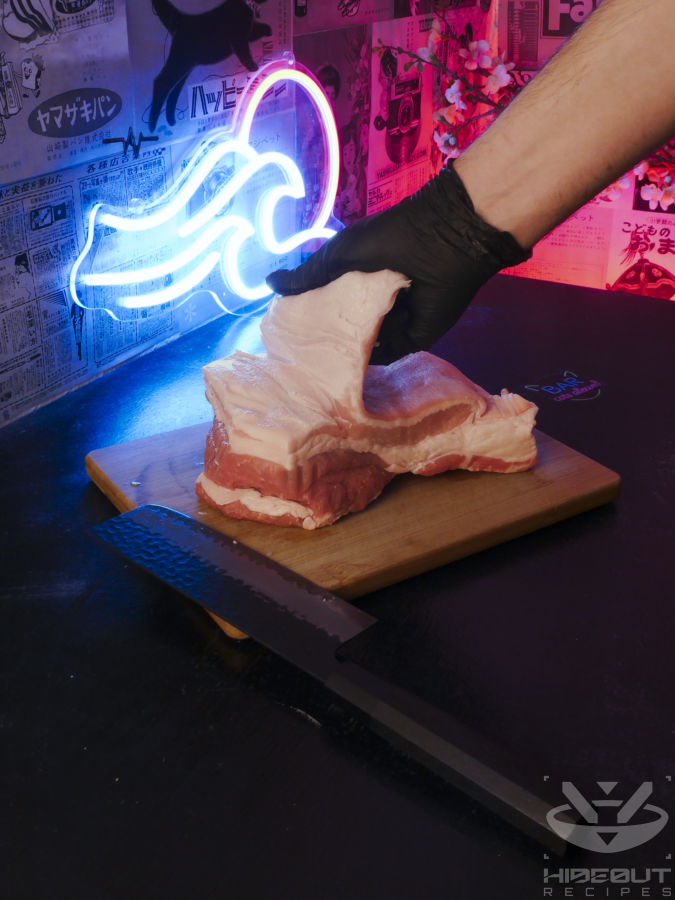
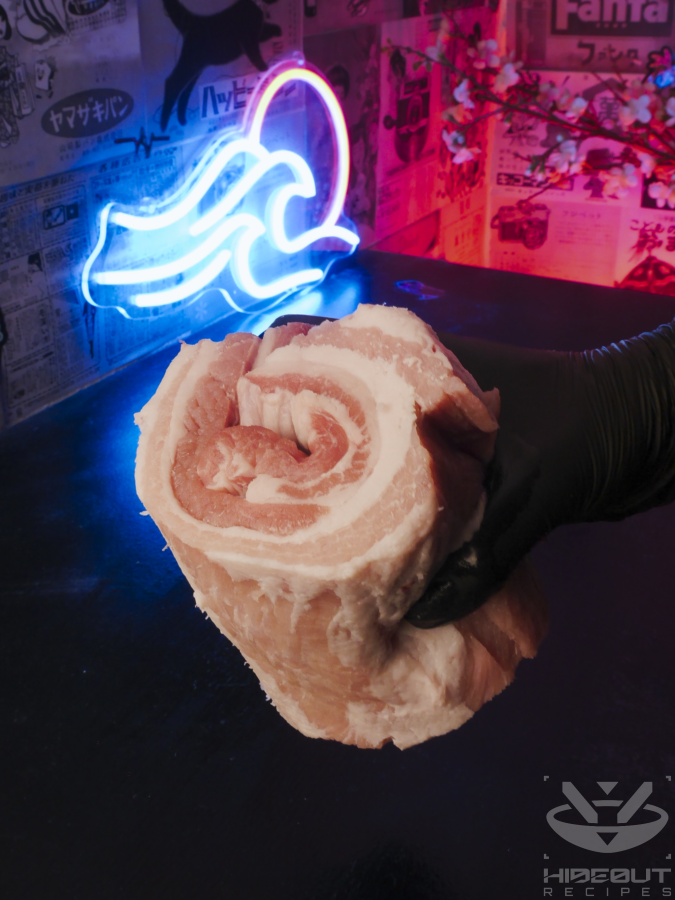
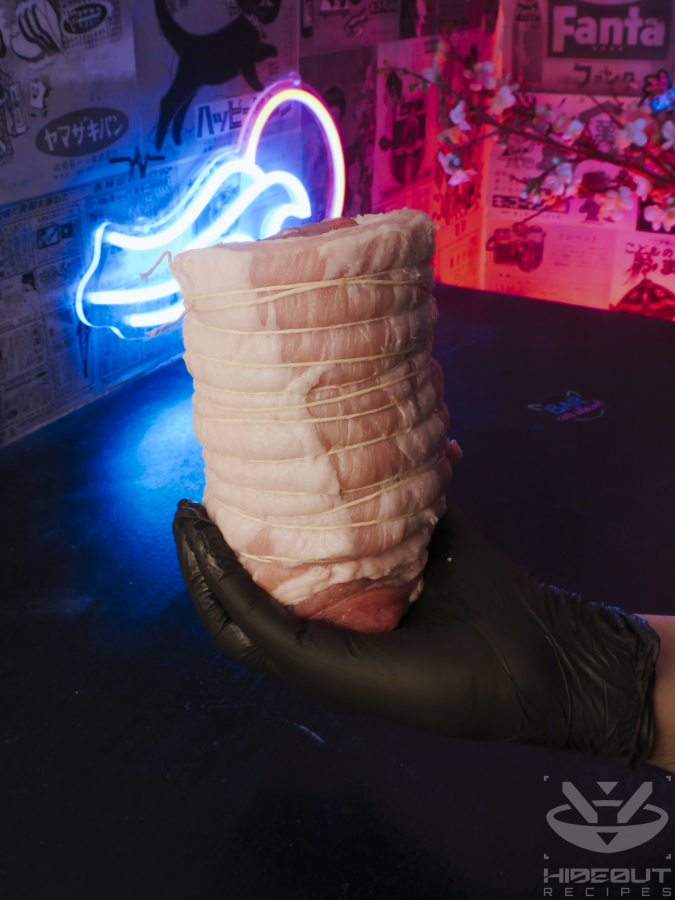
Regarding the right technique of tying it up once it’s rolled, I’ve seen some elaborate descriptions and videos online, but there’s really not much that can go wrong. Just make sure it’s tight, and it will keep the form. If there’s some overhanging meat that you can’t tie up on one side because the cut has an uneven width, even that part will retain its shape after hours of simmering and overnight marinating.
Sear, simmer, marinate
In order to brown the chashu properly, I recommend putting a cast-iron pan over very high heat and searing the hell out of it. Before you begin, open all nearby windows before you get started, and move any overzealous smoke detectors out of range.

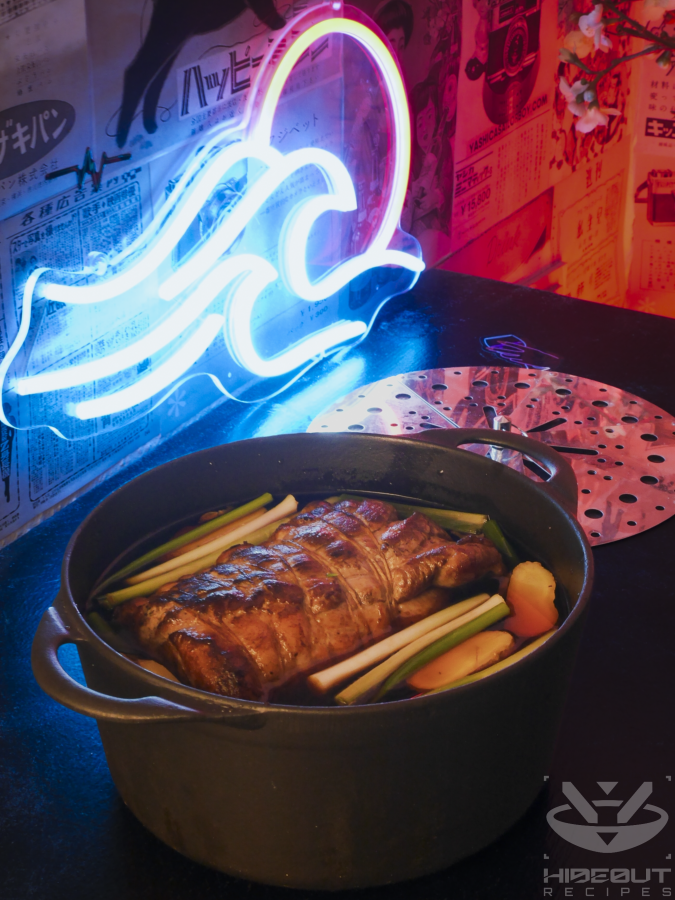
Once browned, chashu needs to simmer for two hours. In the center picture, you can see the Japanese drop lid (or otoshibuta) that I bought in Tokyo last summer. You can get these online around the world (and I’m surprised they’re not more prevalent in most cooking cultures), but it’s not essential to have one for this dish. Just leave the regular lid of your pot slightly open, and every time you come to flip the chashu, make sure that the liquid isn’t evaporating too quickly.
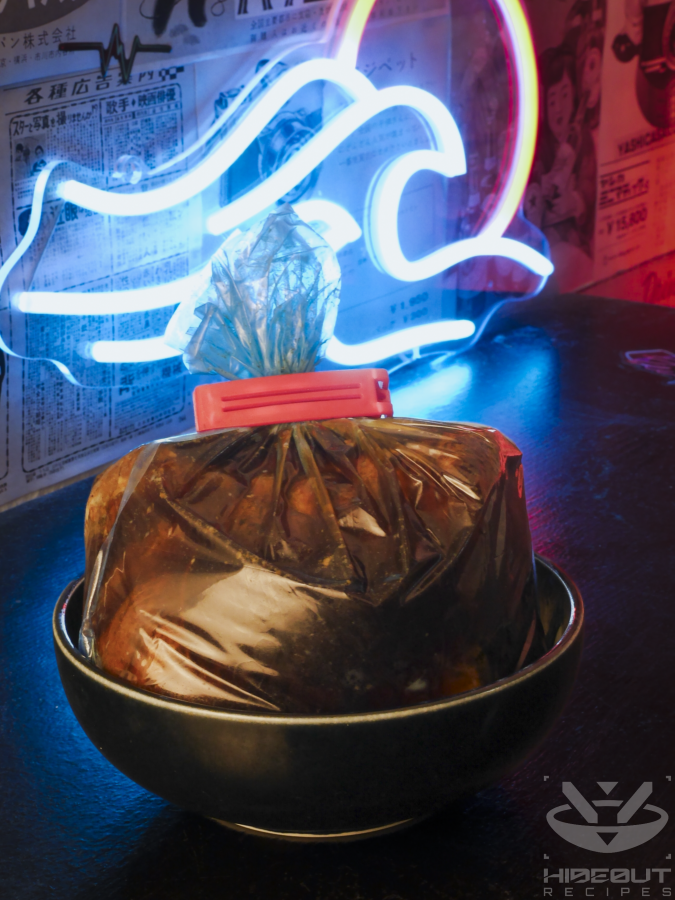
For the overnight marinating step, just take however much liquid you need to cover the chashu inside the container or bag of your choice. Use the leftover broth to marinate ramen eggs!
The morning after
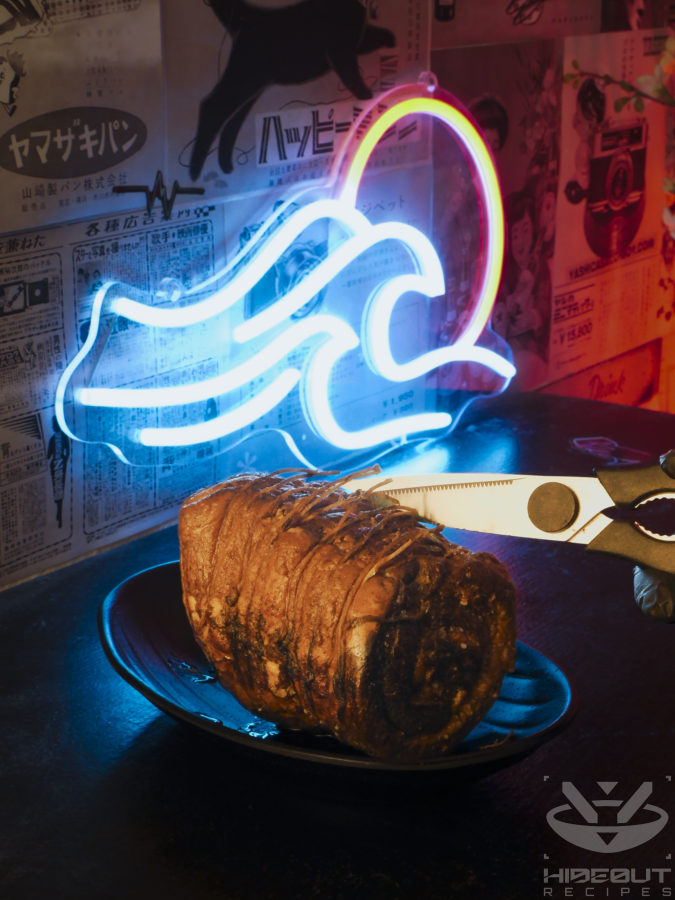
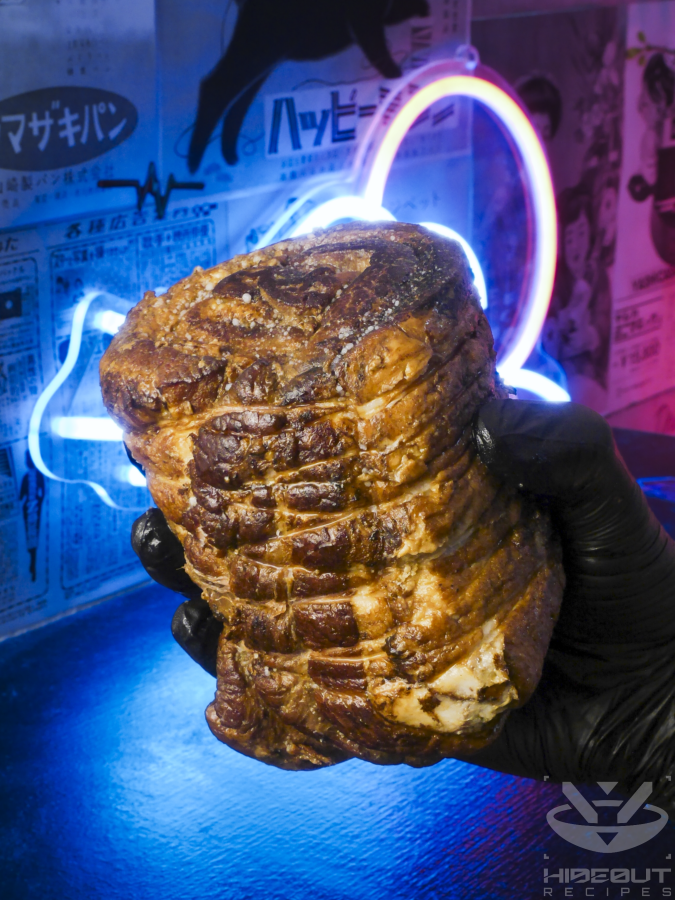
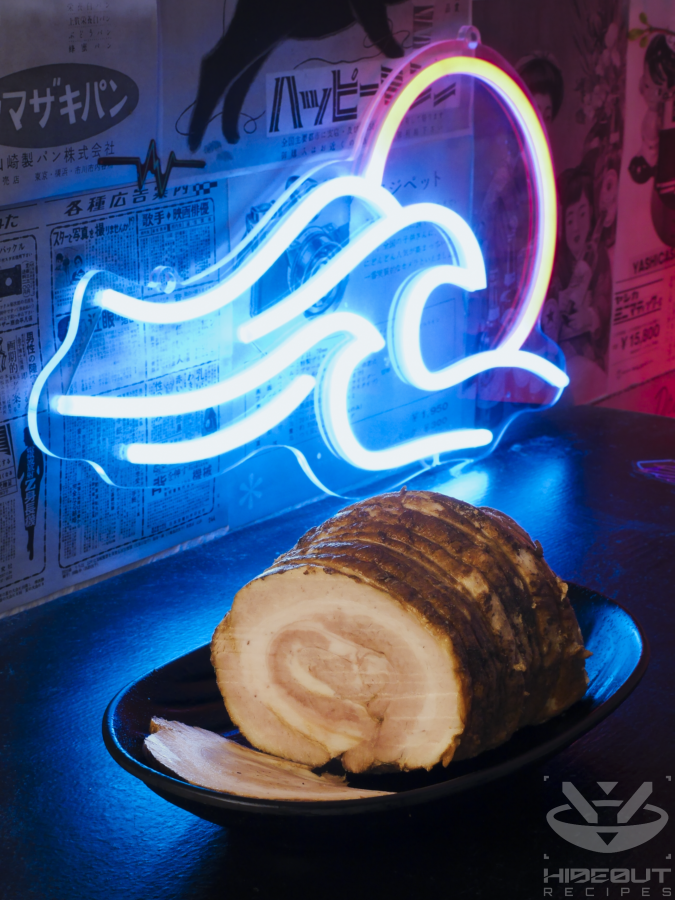
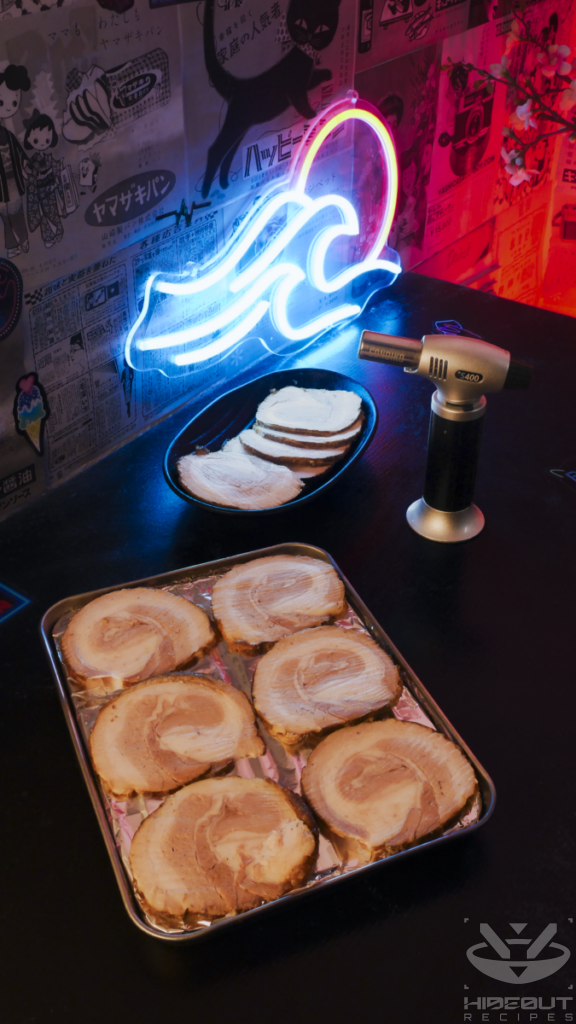
When you cut the butcher’s twine and pull it off, do it slowly so as not to rip out any of the surrounding meat. At this stage, I also like to wipe off larger chunks of fat that accumulated on the outside while marinating. As you cut the meat, make sure the slices are even and just a few millimeters thick.
Light ‘er up!
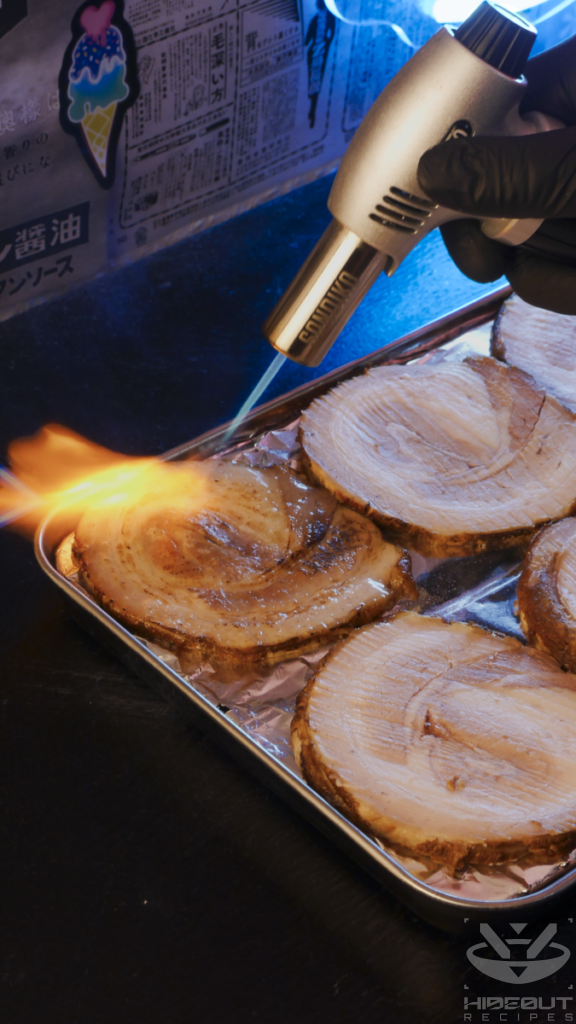
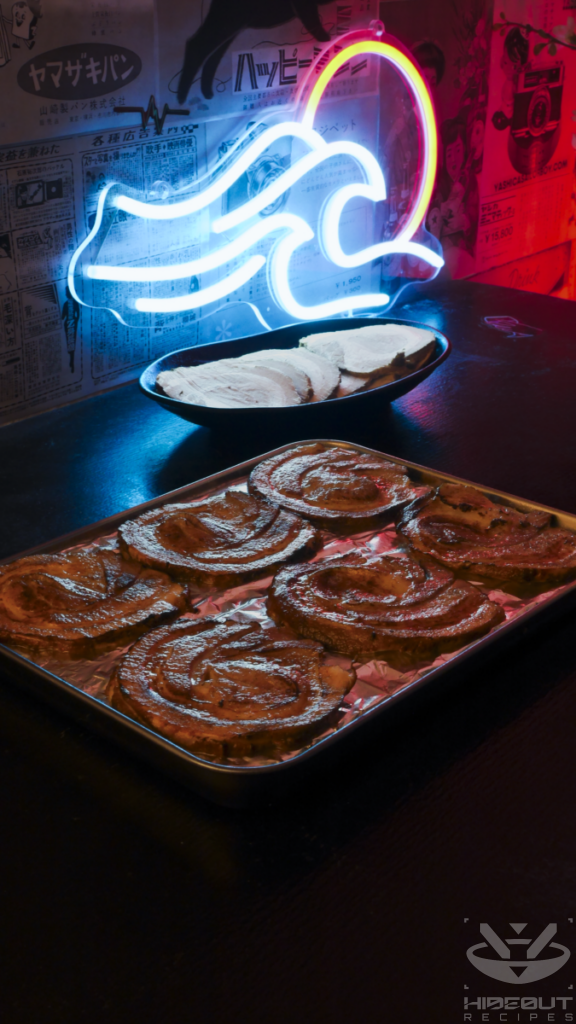
I’ve been to ramen places that barely brown their chashu or skip this step entirely, but in my opinion, it’s mandatory for a good result. If you don’t have a blowtorch, maybe you can try approximating it with your oven’s grill setting – but I doubt it comes out similar to the mellow texture, roasted flavors, and blistering fat you get from a hot open flame.
Recipe credit
Like most of my recipes, I started this one out by basing it largely on an existing one, specifically the Just One Cookbook recipe for rolled Chashu. I‘ve since practiced it many times, made changes to the ingredients and steps (sometimes very few, sometimes many), and written up as much additional advice as I could based on my own experience.
At this point in the post, I usually shout out a place where I had a particularly great version of the dish, but since chashu is just a component of ramen, let me instead recommend the place with the best Tonkotsu ramen I’ve ever had: Taiho Ramen, specifically the Fukuoka branch I visited a few summers ago. No surprise there, since Fukuoka is where Tonkotsu ramen originated!

Chashu 🍜
Equipment
- 1 kitchen burner highly recommended
- some butcher's twine aka cooking string; mandatory
- 1 otoshibuta optional
Ingredients
- 1 kg pork belly one piece w/o bones, rind removed
- 3 green onions
- 1 knob ginger
- 1 tbsp neutral oil for searing
Braising liquid
- 250 ml sake
- 250 ml soy sauce
- 500 ml water
- 130 g sugar
Instructions
Prep the pork belly
- If your pork belly comes with the tough outer skin, remove it slowly with a sharp knife, making sure not to take away too much additional fat.
- Lay out the pork belly in front of you, with the long side along the edge of your table or counter (i.e. from left to right). The side facing upward should be white fat.
- Now firmly grab the pork belly and roll it up along the short side, away from you.
- Run some butcher's twine along one end and tie it tightly together. From there, wrap it around the log numerous times in tight increments until you reach the other side. Run it around that end as well and tie it up once more (optional). Repeat the process in the other direction. Cut off the ball of butcher's twine and tie up any loose ends on the pork belly with one another.Note: This is not an exact science. The main point is that you keep it tight at all times and have a tied-up log in the end. It will keep its shape later, don't worry!
Sear the pork belly
- Heat up the neutral oil in a pan or skillet (I recommend cast-iron for ideal browning). Open a window because things are about to get smoky.
- Once the oil is hot, sear the pork belly from all sides, rotating occasionally.
- After about 10 minutes, once it's browned on all sides, remove from the heat.
Braise the pork belly
- Cut the knob of ginger into 5mm thick cuts. No need to peel it.
- Cut the green onion into 3-4 slices each.
- In a heavy mid-sized pot (aka Dutch oven), mix all the braising liquid ingredients and give them a stir so the sugar doesn't settle at the bottom.
- Place the pork belly in it. It should be at least 75% covered; if not, top up with some water.
- Add the sliced ginger and green onions.
- Bring to a boil over medium heat. If scum gathers at the surface, skim it off with a fine-mesh strainer.
- If you have a Japanese drop lid (otoshibuta), put it on top to reduce evaporation. If not, it's fine to use the pot's regular lid and leave it open just a little.
- Regulate the heat so it stays at a low boil and let it simmer for two hours. Come back every 30 minutes to turn the chashu so it's evenly cooked and infused.
Rest overnight
- Take the pot off the heat and let it cool off for a bit.
- Take out the chashu and place it in a plastic bag (ideal) or container.
- Add enough of the braising liquid so the chashu is fully covered.
- Once fully cooled off, place it in the fridge to marinate for at least 8 hours.Note: You can use any leftover liquid to marinate ramen eggs.
Prepare for ramen
- Take the chashu out of the fridge and remove it from the bag/container.Optional: Wipe off loose fat that's gathered on the outside.
- Using kitchen scissors, cut through the thread and carefully pull it it off.
- Lay the chashu log down on a board and start cutting it into slices using a long, sharp knife. They should be a few mm thick, totaling around 16 for a 1 kg piece.
- Lay them out on a fireproof surface and torch with a kitchen burner until nicely browned. If you're feeling motivated, flip them around and torch the other side as well.
- Your chashu is ready to serve as a ramen topping! I recommend using 2-3 per bowl.If you have more than you need right now, I recommend freezing them in vacuum bags. They should be good to eat for at least a month.