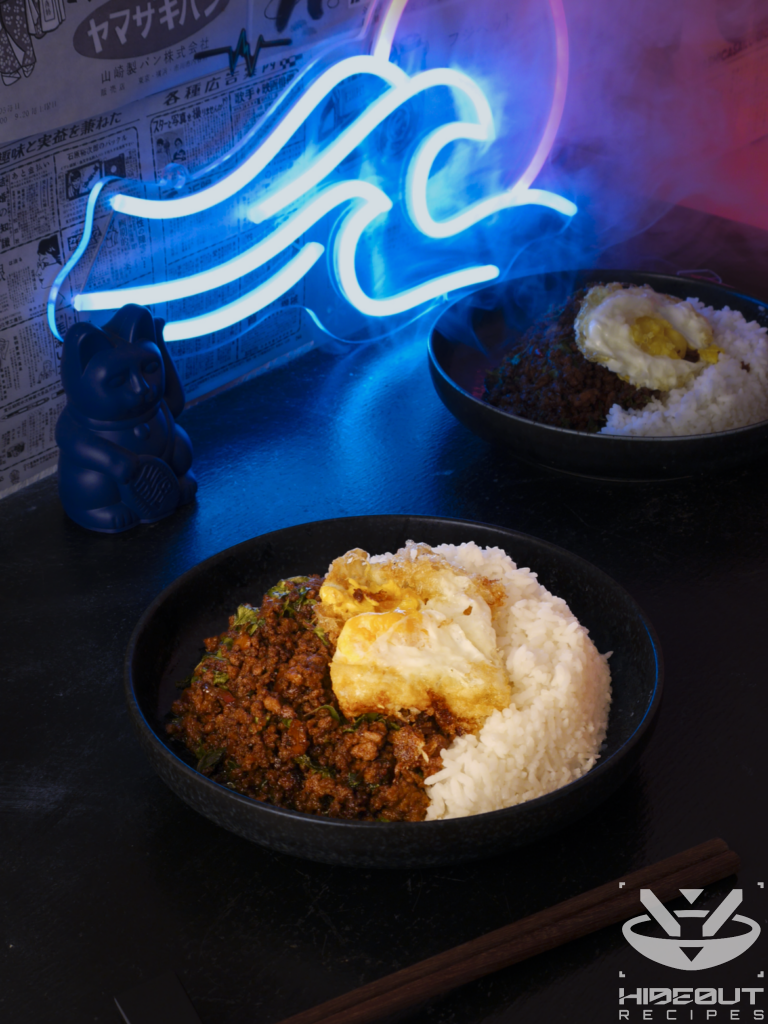
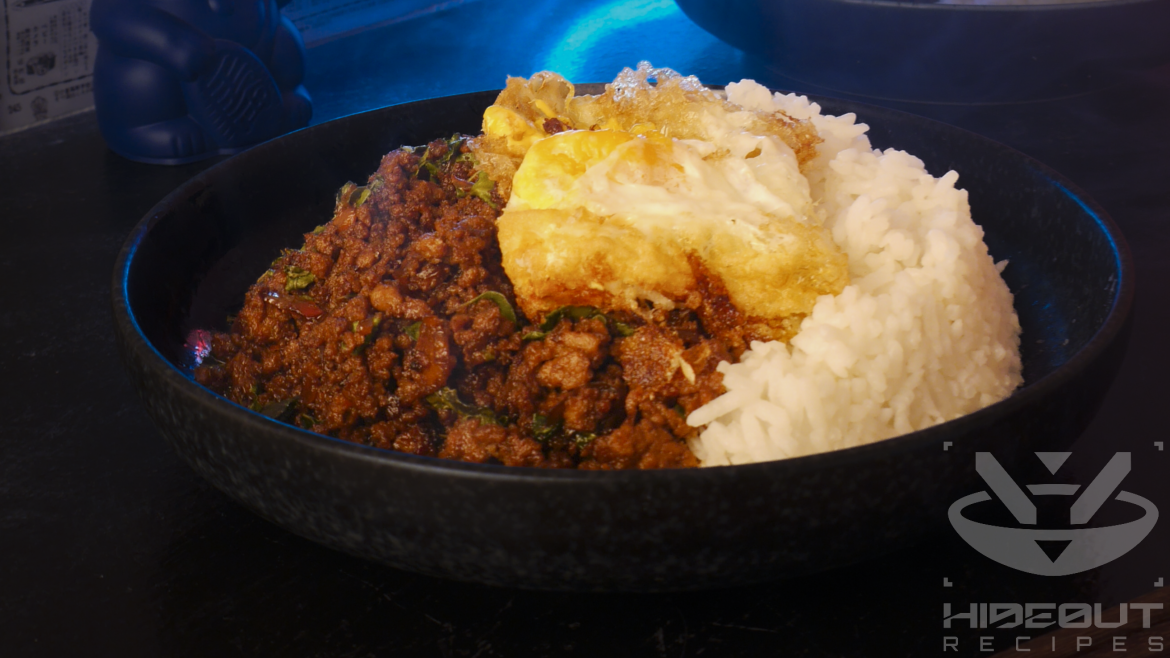
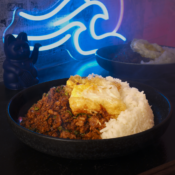
A stir-fry of minced meat, holy basil, and chilies, topped with a deep-fried egg! Fragrant perfection.
It’s named after the sound of the flavor hitting you.
As Overhead in the Kitchen
Let me start off by coming clean about something: All those original names that I put on the social media edits of my recipes – I don’t actually speak all those languages. However, I do want to highlight the cultures they’re originally from, and I always make an effort to get the spelling right in both the original language and in English.
Imagine my confusion when I tried to figure out the most accurate transcription of ผัดกะเพรา, and found half a dozen variations such as pad kaphrao, phat kaphrao, pad kaprow, pad kaprao, pad gaprao, among others. The r doesn’t even go in the same place every time! My main point here is: Whichever of these recipes you encounter, they all mean the same dish. With this inadvertent SEO out of the way, let’s move on to the ingredients.
Holy herb
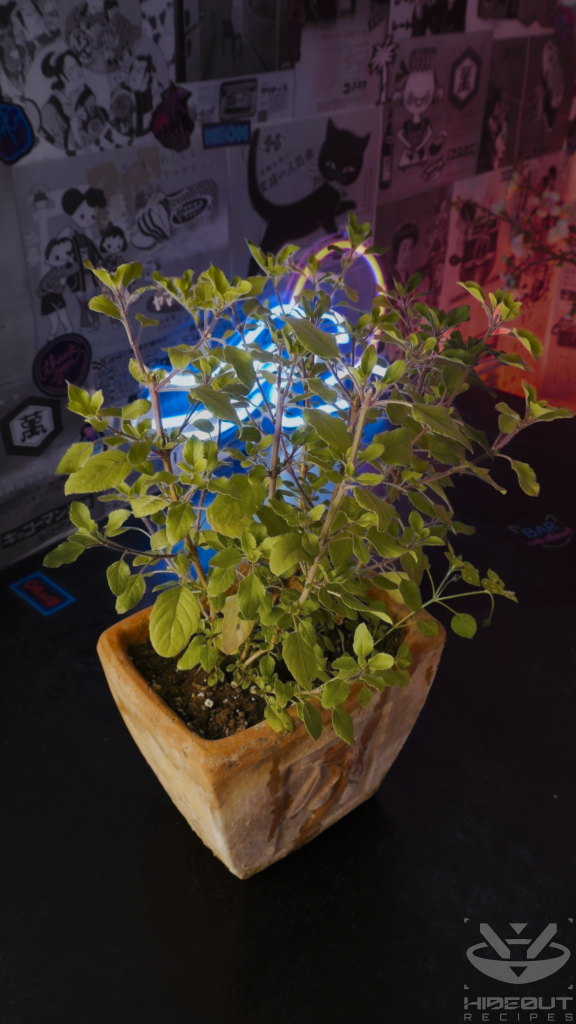
Long before “holy” received its latest Internet slang connotation, there was holy basil, or tulsi. It doesn’t have much in common with its European counterpart, and unfortunately, it can be hard to come by in parts of the world. Plus, I should note that while it is basil from Thailand, it is in fact not regular Thai basil!
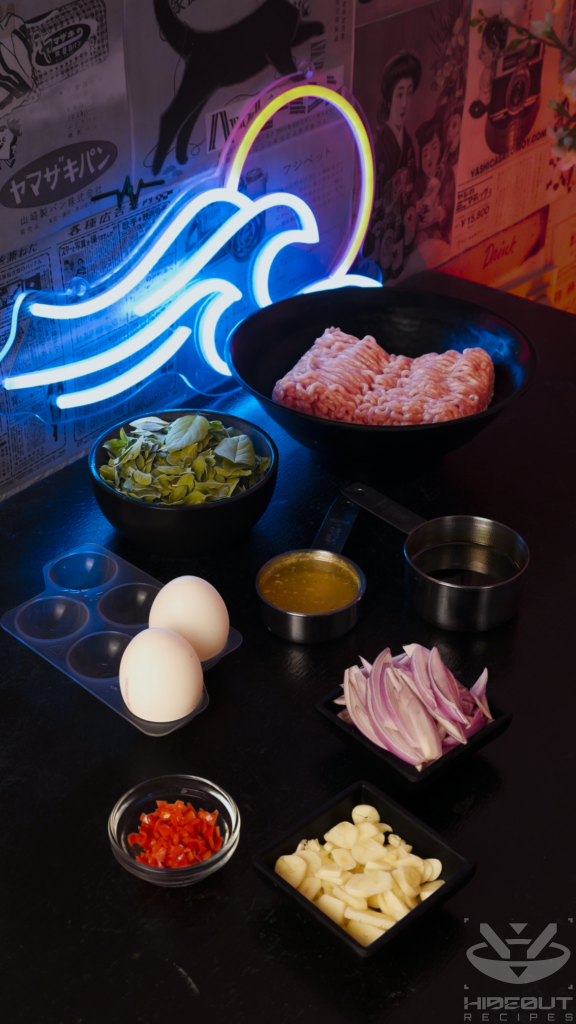
My local Asian grocery store has fresh bunches on offer once in a blue moon, so I decided to grow some at home. The bush in the picture is one of multiple I grew this year (and already picked pretty thoroughly). It takes a while to pick the required amount, especially if the leaves are on the smaller side, but the fragrance and flavor make it more than worth it.
Fried eggcellence
When it comes to the type of minced meat, you can go with chicken or beef if you prefer them over pork. I haven’t tried vegetarian substitutes, but if you know a good one, it may just work as well.
Not all Pad Kra Pao recipes feature fried egg, but it’s an essential addition in terms of taste and texture variety. It’s deep-fried for a short period of time for a crispy egg white but still somewhat runny yolk, provided you get the heat just right.
Pepper pick
The classic choice for this is Thai bird’s eye chilies, but I’ve used different homegrown red peppers as well, such as cayenne and jalapeños. If you didn’t know, the latter do turn red if given enough time; they are usually sold green for logistical reasons. And don’t worry about a geographical mismatch: Jalapeños are actually used for the famous Sriracha hot sauce from Si Racha, Thailand!
Whichever type of chilies you go with, they should be fairly spicy. That being said, I sometimes prefer deseeding them to cut down the heat, but that’s up to you.
Recipe credit
Like most of my recipes, I started this one out by basing it largely on an existing one, specifically the Woks Of Life Pad Kra Pao recipe. In this case, I adjusted the serving amounts quite drastically and added the deep-fried eggs. And as always, I’ve practiced the recipe many times and written up as much additional advice as I could.
In Thailand, Pad Kra Pao was one of many dishes we had on an incredible tour, which took us across floating markets and an orchid farm by Bangkok back in 2024. I highly recommend you check it out if you get the chance!
Pad Kra Pao
Equipment
- 1 large wok or frying pan for stir-frying
- 1 small frying pan optional; for frying eggs
- 1 Thermometer optional; for frying eggs
- 1 spider skimmer optional; for frying eggs
Ingredients
For the stir-fry
- 3 tbsp neutral oil
- 2 shallots
- 7 cloves garlic
- 3 hot chilies small to medium-sized
- 500 g ground pork
- 375 ml holy basil leaves packed
For the sauce
- 1 tsp white sugar
- 1 tbsp fish sauce
- 1 tbsp light soy sauce
- 2 tsp dark soy sauce
- 2 tsp oyster sauce
Additionally
- 80 ml chicken stock or water to reduce saltiness
- 1 Asian cup Jasmine rice uncooked amount; plus some salt
- 2 eggs
- 250 ml neutral oil for deep-frying the eggs
- some coarse salt for the eggs
Instructions
Prep the ingredients
- Pop the washed and salted rice in your rice cooker (or start making it on the stove) now.
- Peel, then thinly slice the shallots and the garlic. Set aside separately.
- Remove the stem from your chilies and slice them in half lengthwise.Tip: I recommend wearing a glove on the hand you use to handle the chilies.
- Remove the chili seeds if you want to cut down the spiciness.
- Mince the chili halves and set aside.
- Mix all the sauce ingredients in a small bowl and stir until the sugar is dissolved.
- Optional: In order to keep the wok and/or the eggs warm while you fry the remaining eggs, pre-warm your oven to 100°C now.
Stir-fry
- Add the neutral oil to a wok or large frying pan over medium-high heat.
- When the oil ripples as you move the pan (but doesn't smoke), add the shallots. Fry for 1-2 minutes.
- Add the garlic slices and fry for another 1-2 minutes.
- Add the minced chilies and fry for another minute.
- Increase the heat to high and add the pork.
- Break it up with your spatula and mix thoroughly with the other ingredients.
- When the pork gets brown and slightly crispy after a few minutes, give the sauce another stir and add it to the wok.
- After another minute, deglaze the wok with the chicken stock (or water) and stir it into the ground meat. Reduce the heat to low while making the eggs.
Fry the eggs
- Add ~2 cm of oil to a separate, small frying pan over high heat.
- Once the oil reaches around 170°C, crack one egg into it. The egg white should be fully submerged in oil. It will splash violently for a moment, so keep your distance or use a splash guard!
- Sprinkle the egg with coarse salt to your liking.
- Deep-fry until the egg white is browned and crispy on the bottom. In order to cook the egg yolk, occasionally spoon oil over it. If you'd like to keep it on the runnier side, skip this step.
- Take out the egg using a spider skimmer. Rest it on a wire rack or a plate lined with paper towels (ideally in the warm oven).
- Repeat until the remaining eggs are done.
Assemble
- Stir the holy basil leaves into the wok. Mix well and fry over medium heat for another 2 minutes.
- Divide the rice between your plates, then add the Pad Kra Pao to the side or on top.
- Place a fried egg on top of each plate and serve immediately!