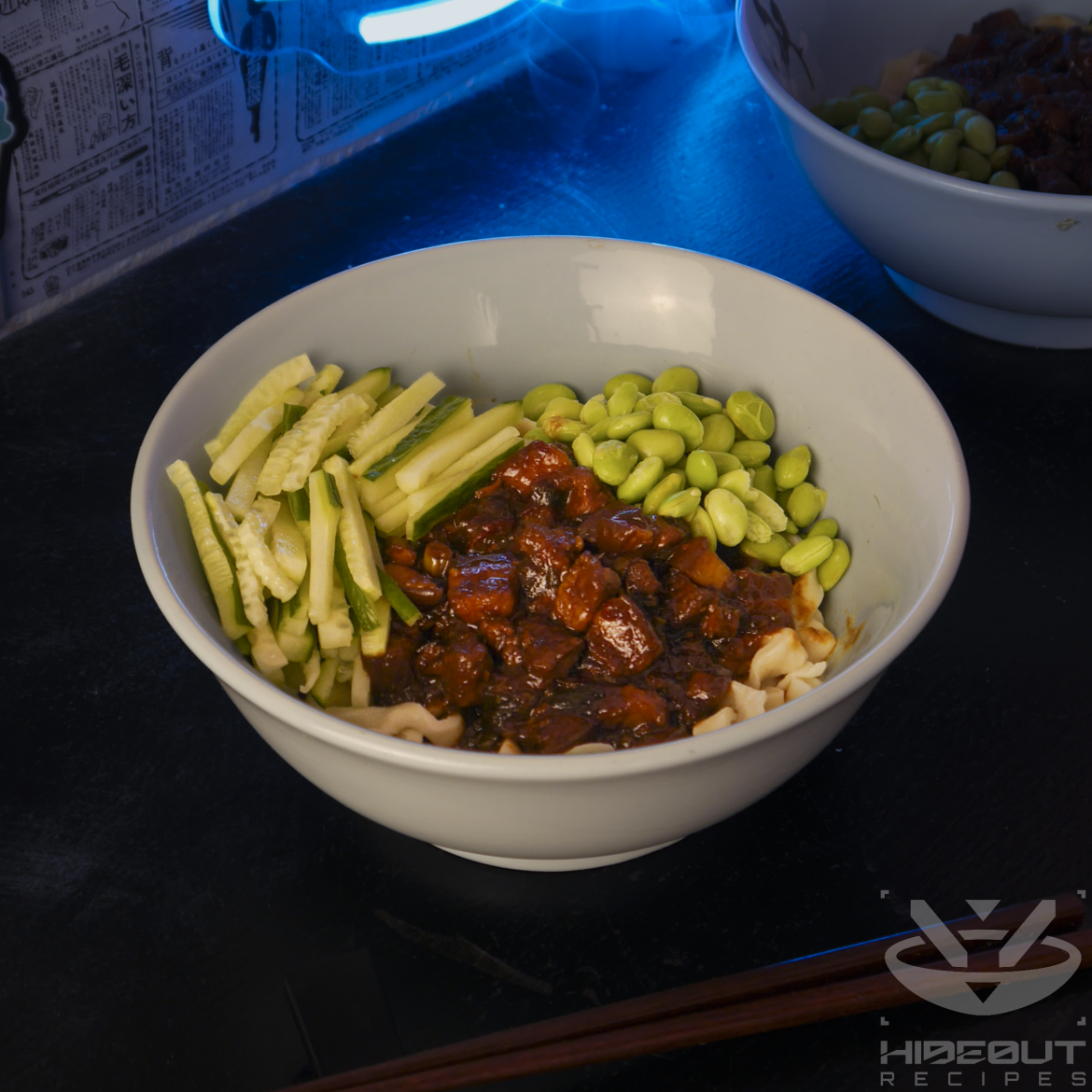
Hand-cut noodles topped with fresh vegetables and a fatty, salty sauce – a perfect contrast that will keep you hooked until the last bite.
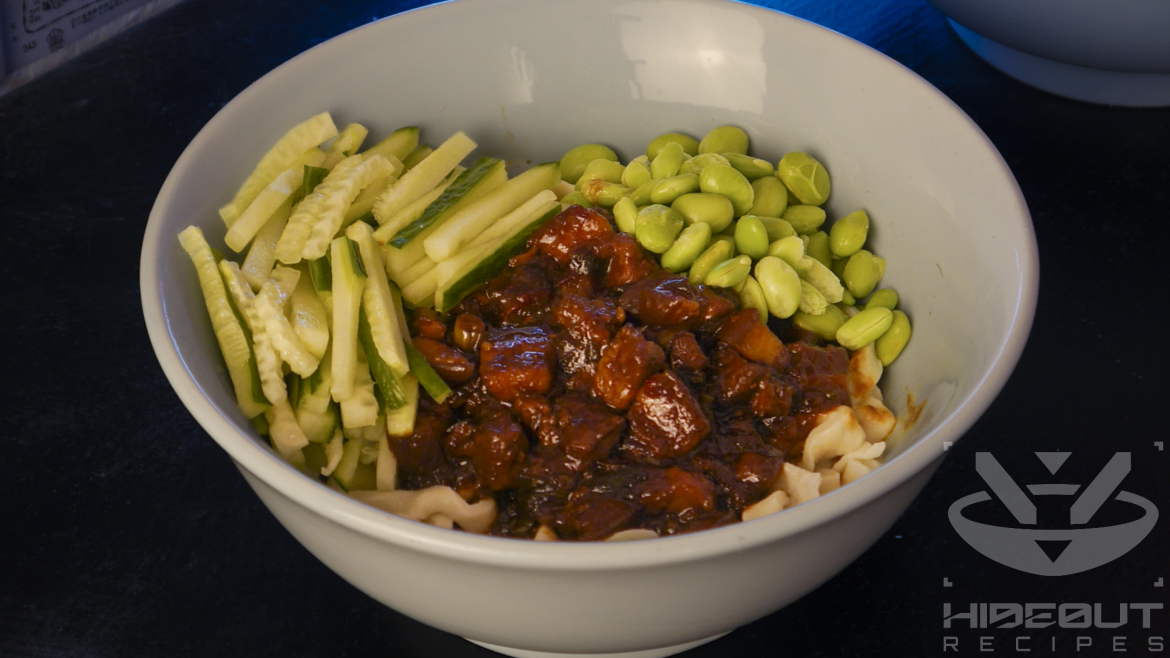
Zha Yum Yum!
A Patron
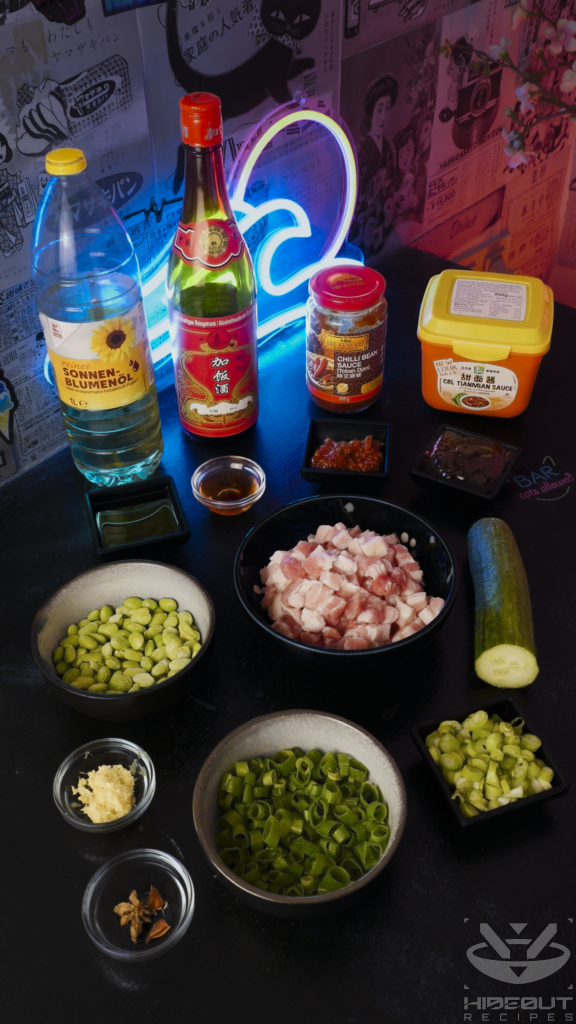
The meat and potatoes
I’ve seen versions of this dish using minced meat instead of pork belly. Even if you’re not a huge pork belly fan, I promise that it’s the superior version, and to my knowledge the more authentic one as well. The smaller you dice it and the longer you simmer it, the more tender it will become.
When it comes to the fresh topping, you can really pick any two vegetables you like as long as they can be eaten raw (or blanched). Besides my picks of cucumber and edamame beans, I recommend julienned carrots or any type of radish as well as bean sprouts. The point is to provide a contrast to the savory sauce and soft noodles, both in taste and in texture.
Are you bean confused?
The sauce is a combination of two pastes, one of which my recipe swaps out:
🌾 One part Tian Mian Jiang aka Tian Mian sauce aka sweet flour sauce aka sweet bean sauce. It contains mostly wheat flour and a small amount of soy beans. It’s a dark brown, smooth paste.
🫘 Two parts Huang Dou Jiang aka yellow bean paste aka soybean sauce, which primarily consists of fermented soy beans. It’s orange or red despite its name, and often chunkier. If you can find this, great!
🌶️ My recipe substitutes the latter for a sauce I’ve found to be much easier to get: Doubanjiang aka Toban Djan aka broad bean chili sauce aka fermented chili bean paste aka spicy chili bean paste. This is made primarily from fava beans, which come in a variety of shapes and sizes. It’s a spicy, chunky paste. Its red color comes from the added chilies and fermentation process.
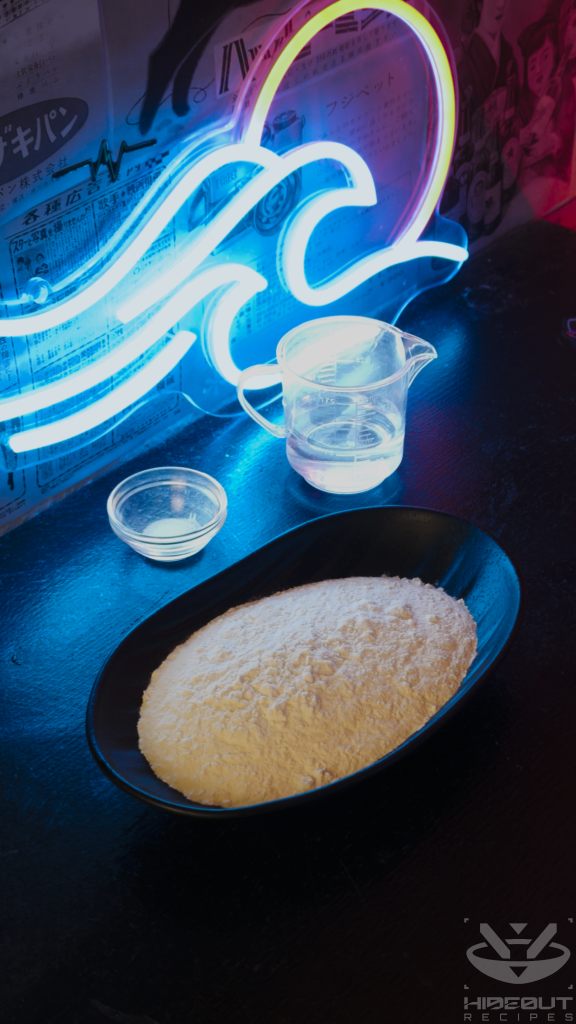
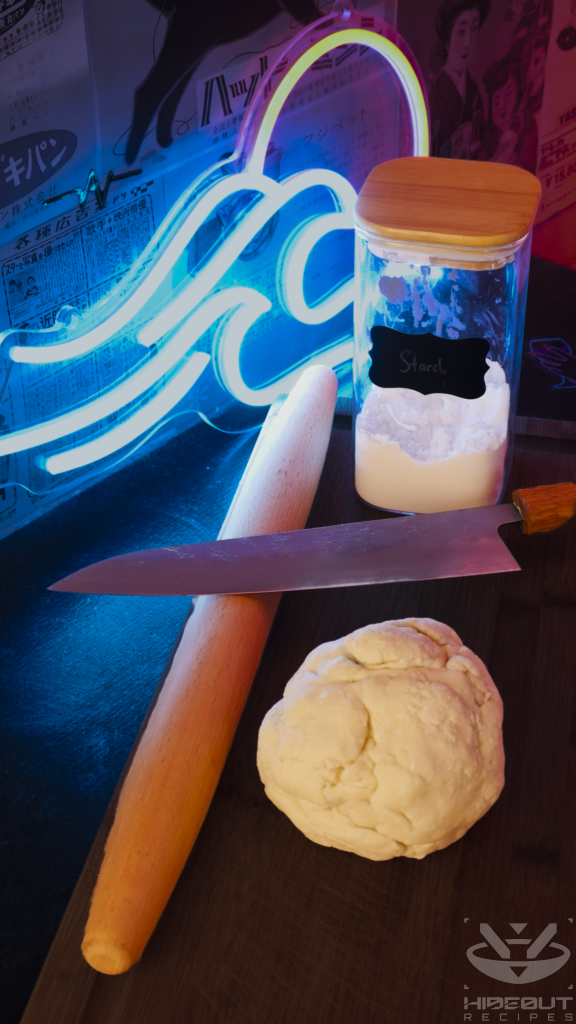
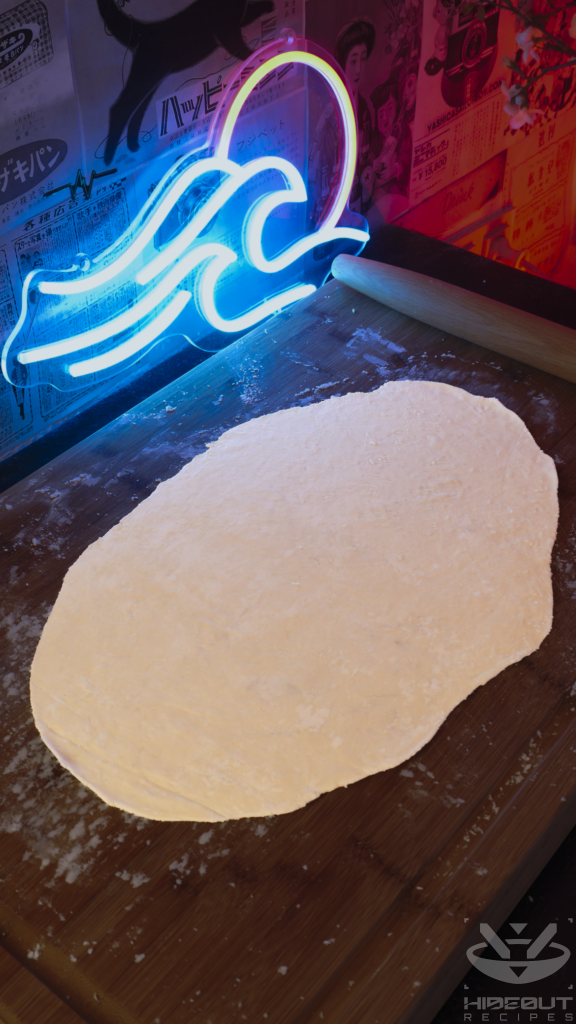
Knife-cut knoodles 🔪
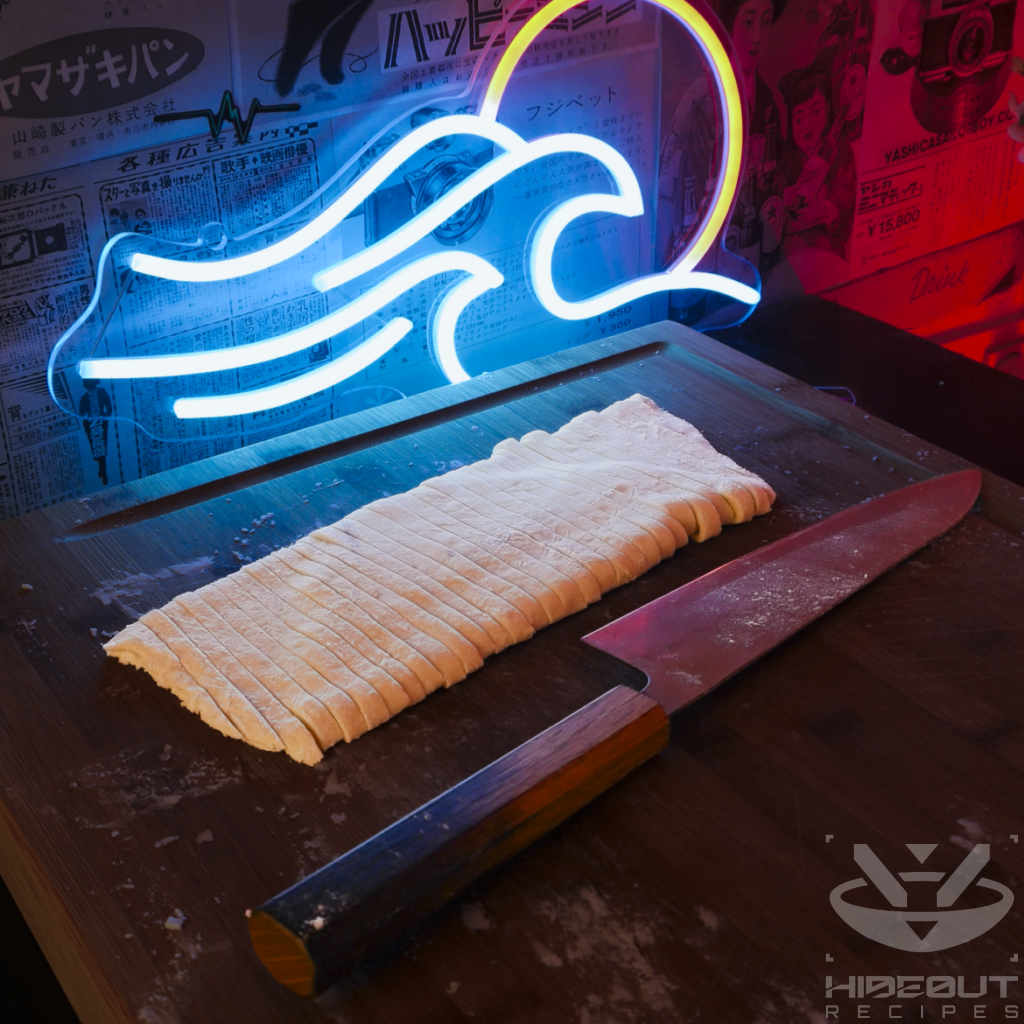
Homemade noodles elevate the dish significantly over store-bought ones, and they really don’t take long to make. I’ve seen both spaghetti-width and tagliatelle-width noodles used in Zha Jiang Mian, and I prefer the latter due to their chewy texture. They’re very quick and easy to make with a knife, but if you prefer spaghetti-style noodles, I recommend using a pasta maker instead.
This dish takes a while to prepare, but it’s perfect for preparation in bulk. I often make larger batches of both the sauce and the noodles, as both lend themselves to freezing. Right after cutting the noodles, add them to a small freezer bag in individual portions. I recommend mixing in a bit of extra starch and giving the bag a shake to make sure they’re all nicely separated. Next time you crave Zha Jiang Mian, all you have to do is chop the vegetables, warm up the sauce, and cook the noodles.
Recipe credit
Like most of my recipes, I started this one out by basing it largely on an existing one, specifically the Red House Spice Zha Jiang Mian and Easy Homemade Noodles recipes. I’ve since practiced it many times, made changes to the ingredients and steps (sometimes very few, sometimes many), and written up as much additional advice as I could based on my own experience.
This is usually where I shout out a good place to get this dish, but I have to admit I’ve never had Zha Jiang Mian at a restaurant before. I hope to visit China some time soon to get it straight from the source!
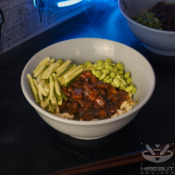
Zha Jiang Mian
Equipment
- 1 Rolling Pin for the dough
Ingredients
For the sauce
- 300 g pork belly
- 2 tbsp neutral oil
- 3 stalks scallions
- 1 knob ginger
- 1 star anise
- 1 tbsp Shaoxing wine
- 2 tbsp sweet bean sauce (Tian Mian Jiang) see notes above!
- 4 tbsp yellow bean paste (Huang Dou Jiang) or chili bean paste (Doubanjiang) see notes above!
- 150 ml water
Vegetables (sub with any fresh veggies you prefer)
- 1 cucumber small
- 70 g edamame beans
For the noodles
- 180 g all-purpose flour
- 1 g fine salt
- 80 ml water
- 1 tbsp starch
Instructions
Make the dough
- Mix dry dough ingredients in a large bowl.
- Slowly stir in the water while mixing, then knead into a uniform ball.
- Cover and leave for 30 minutes.
- Knead once more until smooth.
Make the noodles
- Dust a large surface with starch to keep the dough from sticking.
- Flatten the dough into a ~2 mm thick rectangular sheet using a rolling pin. While doing so, sprinkle some starch on top as well. Flip and turn the dough around to get an even shape and thickness.
- Fold the dough sheet twice to make it shorter and thus easier to cut.
- Using a sharp knife, cut it into ~6 mm wide strips.
- Gently pull the noodles apart, mix in some more starch, and store in a place where they won't dry out (e.g. a covered bowl or freezer bag).
Prep the veggies
- Divide the scallions into the green and white halves, then chop both separately into thin slices and set aside.
- Peel, then mince the ginger.
- Julienne the cucumber.
- If you want, you can blanch the edamame beans in boiling water for 1 minute. I usually skip this part.
Make the sauce
- Dice the pork belly into 1 cm cubes. You can keep the tough outer skin on.
- Heat the neutral oil in a skillet or wok (that you have a lid for!) over medium heat. Once the oil shimmers as you move the skillet around, it's hot enough.
- Add the green parts of the scallions, ginger, and star anise. Sizzle for ~2 minutes until fragrant.
- Add the pork and give it a good stir. Fry until it's no longer pink.
- Add the Shaoxing wine and the two pastes (Tian Mian Jiang and Doubanjiang).
- Stir thoroughly while adding the water, then cover with a lid.
- Leave to simmer for 20 minutes, or longer if you prefer.
- In the meantime, heat up the water for the noodles. I recommend using one small pot per serving and boiling them separately.
- Take the lid off your sauce and turn the heat up to high.
- Stir as it thickens for about 5 minutes (or to your liking).
- Add the white parts of the scallions, give it another stir, and take it off the heat. Cover with the lid again to keep warm.
Boil the noodles
- When the sauce is done and the water boils, add the noodles to their pot(s).
- Leave alone for at least 30 seconds, then stir gently to pull apart any clumps.
- They are done after just 2 minutes. Drain using a colander.
Assemble
- Put one serving of noodles into each bowl.
- Spoon the sauce on top.
- Arrange the vegetables along the sides. Enjoy!